Demystifying Carpet Repair & Re-stretching Costs: A Homeowner's Guide to Pricing
https://ajaxcarpetservice.com/demystifying-carpet-repair-re-stretching-costs-a-homeowners-guide-to-pricing/
demystifying-carpet-repair-re-stretching-costs-a-homeowners-guide-to-pricing
Introduction to Carpet Repair Costs
Understanding carpet repair and re-stretching cost starts with knowing what’s being fixed and why. Stretching addresses loose carpet and ripples by re-tensioning it across the room. Repairs cover issues like burns, pet damage, split seams, frayed thresholds, and localized stains through techniques such as bonded inserts (patches), seam repair, or transition fixes.
What drives carpet repair pricing:
- Type of issue: ripples vs. a burn or pet damage require different tools and time.
- Size and location: a small doorway seam is faster than a large center-room patch.
- Access and furniture: empty rooms cost less than full rooms that need moving.
- Carpet and pad condition: delamination, worn backing, or degraded pad add steps.
- Pattern and pile type: patterned or Berber carpets demand careful matching.
- Stairs and closets: increase labor due to cuts, treads, and tight spaces.
- Materials: replacement pad, tack strip, transition metals, or donor carpet.
- Minimum service charges and travel: often applied to single-room jobs.
Typical carpet stretching cost is commonly priced per room (up to a set square footage) or by the linear foot of wrinkles. In many markets, homeowners see $100–$200 per standard room for re-stretching, with stairs at $5–$15 per step. Carpet ripple repair cost falls within similar ranges because the fix is stretching plus re-trimming and re-tacking.
For repairs, national averages often fall into these brackets:
- Seam repair: $100–$200 per seam.
- Threshold/transition repair: $50–$120 per doorway, plus materials if needed.
- Bonded insert (patch) for burns or pet damage: $125–$300, depending on size and pattern matching.
- Pad/tack strip replacement: $2–$5 per linear foot when water or pets have affected edges.
A thorough damaged carpet repair estimate should note square footage, number of seams/doorways, furniture handling, subfloor or moisture issues, and any material needs. Ask whether the cost to fix carpet includes cleanup, re-trimming at baseboards, and a warranty on workmanship to avoid surprises.
Why Carpet Repair and Re-stretching?
Choosing repair and re-stretching over replacement protects your budget and your floors. A professional stretch removes ripples and waves that create trip hazards, grind soil into fibers, and make rooms look tired. In most homes, the carpet repair re-stretching cost is a fraction of replacement and can add years of useful life.
Loose carpet happens for predictable reasons: initial install without a power stretcher, seasonal humidity swings common in Northwest Indiana, aging cushion, heavy furniture being dragged, or seam and tack strip failure. Those “speed bumps” you see aren’t just cosmetic. They accelerate wear and can lead to delamination if ignored. Power re-stretching to CRI standards pulls the carpet drum-tight and resets appearance.
What drives carpet repair pricing:
- Room size and layout (hallways, closets, multiple doorways add time)
- Severity of ripples and how many walls need re-stretching
- Furniture handling and accessibility
- Stairs vs. open rooms (steps are more labor-intensive)
- Seam repairs, transitions, or tack strip replacement
- Carpet type (Berber/loop and patterned goods require extra care to match)
- Cushion and subfloor condition
- Add-ons like patching burns or pet damage and post-stretch cleaning
Concrete examples:
- Light ripples in an empty 12×15 bedroom: a straightforward power stretch along one or two walls keeps the carpet stretching cost low and is typically billed per room.
- Family room with multiple doorways, a sectional, and a split seam: the cost to fix carpet rises because moving furniture, re-seaming, and re-tacking add labor.
- Pet urine spot the size of a dinner plate: a bonded insert using matching remnant resolves odor and staining; if no remnant exists, a closet donor piece may be used, affecting the damaged carpet repair estimate.
Because every floor is different, a brief on-site inspection yields a precise carpet ripple repair cost with no surprises.
Types of Carpet Damage Requiring Repair
Not all carpet problems are created equal. The type and severity of damage determine the repair method—and directly influence carpet repair pricing, timeline, and results.
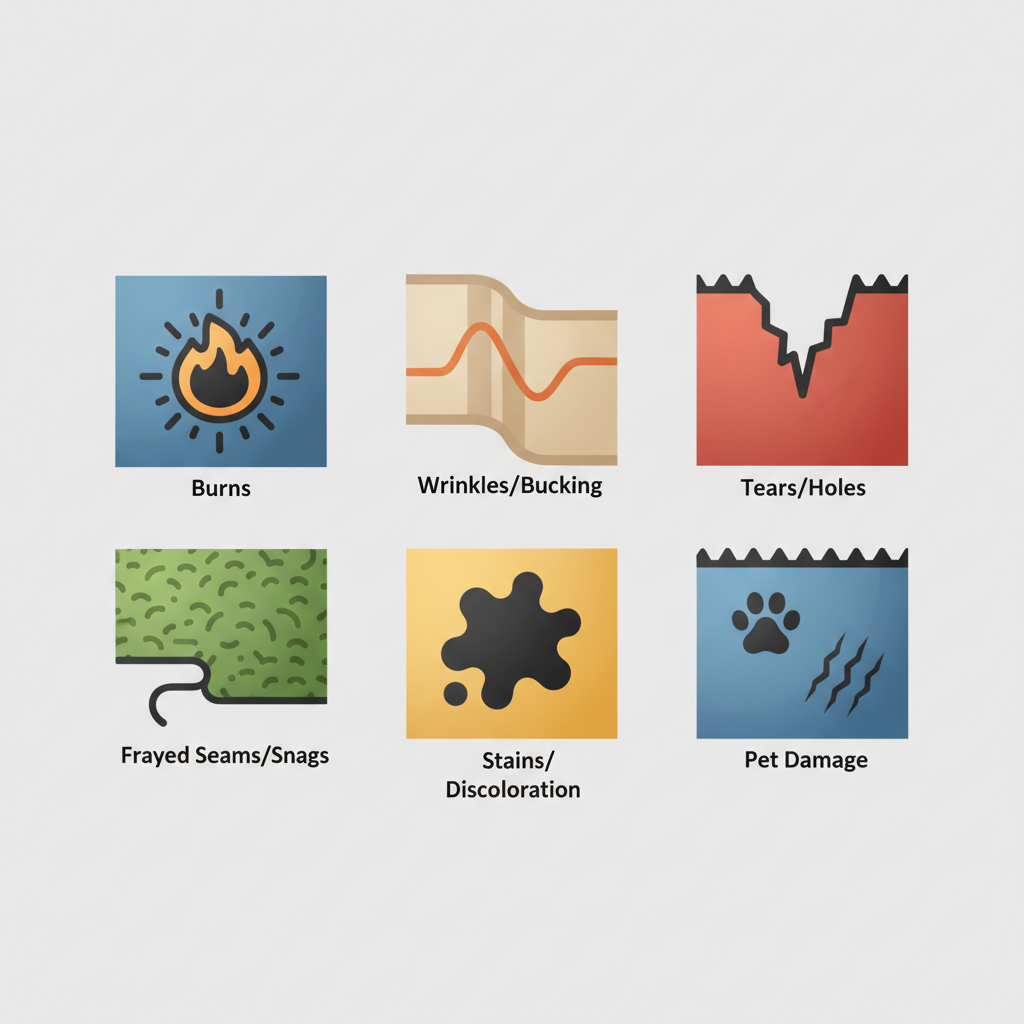
- Ripples and waves: Loose carpet forms wrinkles from humidity, poor installation, or heavy traffic. Power-stretching resets tension and often requires re-setting seams and transitions. Your carpet ripple repair cost varies with room size, furniture moving, and whether door trims or thresholds must be removed and reinstalled.
- Seam splits: Seams can open from age, heat, or improper seaming tape. Repairs involve re-trimming, adding premium seam tape, and heat-bonding. Patterned or Berber carpets require extra alignment, affecting the cost to fix carpet due to added labor.
- Pet damage: Scratches at doorways, torn fibers, or chewing usually call for a bonded insert (patch) using matching donor carpet—often from a closet. Urine damage may also require pad replacement and odor treatment. Matching dye lots and pattern direction can influence a damaged carpet repair estimate.
- Burns and stains: Cigarette burns, candle wax, or bleach spots typically need a precise patch, or in some cases color repair. The size of the affected area and fiber type (nylon vs. polyester) impact the final carpet repair re-stretching cost when multiple services are combined.
- Frayed edges and transitions: Wear at tile or hardwood thresholds may need new tack strip, metal edging, or re-seaming. Concrete subfloors or damaged strip add time and materials.
- Loose or squeaky stairs: Stair treads and noses can loosen, requiring targeted re-stretching and re-fastening. Curved or wrapped stairs take longer than straight runs, affecting carpet stretching cost.
- Water damage and delamination: Flooding or repeated wetting can separate backing layers. Repairs might include drying, pad replacement, antimicrobial treatment, and re-stretching—or replacement if delamination is extensive.
A professional inspection translates these conditions into a clear, line-item damaged carpet repair estimate, so you know the exact cost to fix carpet before work begins.
Understanding Carpet Re-stretching Issues
When wall-to-wall carpet loosens, it forms ripples, waves, or buckles that create trip hazards and accelerate wear. Re-stretching returns the carpet to its original tension using a power stretcher, then re-tacks and trims the edges. Addressing the issue early protects your subfloor, prevents seam failure, and keeps warranties intact—key context when weighing any carpet repair re-stretching cost.
Why carpets loosen:
- Installed with a knee kicker instead of a power stretcher
- Temperature and humidity swings in seasons or unconditioned spaces
- Heavy furniture dragged across the pile
- Worn tack strips or insufficient tack grip
- Cushion breakdown, wrong pad thickness, or delamination after moisture
- Water events that expand, then relax backing
Signs you need re-stretching:
- Visible wrinkles or ripples that “walk” across the room
- Soft, spongy feel or a popping sound near walls
- Fraying at transitions or light showing at baseboards
- Stairs with loose treads or peaked seams
What drives carpet stretching cost:
- Room size and layout: open rectangles are simpler than rooms with alcoves, closets, or built-ins
- Obstacles: fully furnished spaces take longer; empty rooms reduce labor
- Seams and transitions: re-seaming or resetting metal/wood thresholds adds steps
- Stairs: each tread/risers must be stretched and re-tacked individually
- Pad/tack condition: replacing degraded cushion or tack strips increases the cost to fix carpet
- Damage or water exposure: delamination or split seams can shift a project from simple stretching to repair
Example scenarios:
- A 12×15 living room with two broad ripples and stable pad often resolves with a straightforward stretch—carpet ripple repair cost is typically far less than replacement.
- A hallway and staircase combo with loose treads, worn transitions, and a split seam requires more labor and materials; your damaged carpet repair estimate will reflect the added seaming and stair work.
- Post-leak ripples with cushion collapse may need pad replacement in affected areas before stretching—impacting overall carpet repair pricing.
Factors Affecting Repair Complexity
Complexity drives carpet repair re-stretching cost more than room size alone. Two jobs with the same square footage can be priced very differently based on what’s under and around the carpet, the type of damage, and how the room was originally installed.

Key factors that increase or decrease carpet repair pricing:
- Severity and type of issue: A single doorway seam split or a small cigarette burn is simpler than multiple waves, open seams, or widespread pet damage. Water or urine contamination often requires pad replacement and sealing the subfloor before repairs.
- Carpet construction and age: Loop/berber and patterned carpets demand precise pattern matching and careful handling to avoid snags, raising the cost to fix carpet. Older carpets with backing delamination may tear when stretched and can require section replacement.
- Layout and access: Stairs, hallways with multiple doorways, built-ins, and tight closets add time. Occupied rooms with heavy furniture, aquariums, or large sectionals often require extra labor to safely shift items or work in sections.
- Seams and transitions: Seams that run perpendicular to the stretch direction, metal transition bars, and multiple floor-type transitions (tile, hardwood, LVP) add steps for removal, re-setting, and re-sealing.
- Subfloor and tack strip condition: On concrete, replacing tack strip may involve drilling/epoxy; on wood, fractured or loose tackless must be reset. Cracked or uneven subfloors can require minor prep before a successful stretch.
- Cushion issues: Crushed, incorrect, or contaminated pad won’t hold a stretch and can necessitate pad swap in affected areas.
- Prior installation quality: Carpets originally installed with a knee kicker instead of a power stretcher often develop ripples; excessive trimming at walls leaves little material to re-stretch, sometimes requiring a donor piece from a closet.
Concrete examples:
- Lower carpet ripple repair cost: An empty 12×12 bedroom on a wood subfloor with light ripples and no seams.
- Higher carpet stretching cost: A 20×15 living/dining combo with two seams crossing the stretch path, a piano to work around, and brittle backing.
Because these variables compound, a damaged carpet repair estimate is most accurate after an on-site assessment that confirms construction, seam locations, subfloor, and furniture logistics.
Carpet Material and Specific Type
Carpet fiber and construction play a major role in carpet repair re-stretching cost because they determine how the material handles tension, heat, and seaming. The tougher the material to manipulate—or the higher the risk of visible repair—the more labor time and skill required.
- Nylon (cut-pile/texture): Resilient and responds well to power-stretching. Typically mid-range carpet stretching cost and patch repair pricing. Good elasticity reduces the chance of seam splits during re-stretch.
- Polyester (plush/frieze): Stretches well but backing can delaminate on older installs. Patches blend decently if donor material matches. Usually lower to mid-range cost to fix carpet.
- Olefin/Polypropylene (Berber/loop): Loop construction “zippers” when damaged; repairs often require loop reweaving or larger donor patches to hide patterns. Expect higher carpet repair pricing for snags, pet damage, and doorway frays.
- Wool (cut or loop): Heat- and moisture-sensitive; requires controlled stretching and careful seaming. Premium material and slower handling increase both repair and re-stretch costs.
- Patterned or multi-level loop: Pattern matching at seams and thresholds adds time. Re-stretching must maintain pattern alignment, which can increase labor by 25–50% compared to a solid cut-pile.
Backing and pad also matter. Older jute or latex backings can be brittle; re-stretching may expose weak seams or require new seam tape. Attached-pad products are heavier and trickier to tension evenly. Commercial glue-down carpets aren’t “stretched”; ripples usually indicate failed adhesive, shifting the scope from stretching to re-gluing or replacement in affected areas.
Examples to set expectations for a damaged carpet repair estimate:
- Standard nylon cut-pile bedroom re-stretch: often in the $90–$160 per room range for typical carpet ripple repair cost.
- Wool or heavy Berber of similar size: commonly $150–$250 due to careful handling and pattern alignment.
- Small cut-pile patch (iron burn, pet spot): frequently $120–$200 if donor carpet is available.
- Berber loop reweave or patterned patch: often $175–$350 depending on match complexity and location.
Material, construction, and backing conditions are the biggest variables behind the final carpet stretching cost and cost to fix carpet.
Extent of Damage or Area Size
How much you’ll pay often comes down to how much carpet is affected and how complex the work will be. Technicians price carpet repair and re-stretching cost by the time, materials, and risk involved, all of which scale with area size and damage severity.
For repairs, size and location matter:
- Small, contained issues (a 3×3 inch burn or a frayed doorway edge) are faster to fix than larger patches.
- Donor carpet needs drive carpet repair pricing. A bleach spot might require taking matching carpet from a closet and seaming in a new piece; patterned or Berber styles add time for alignment.
- Seams and transitions add complexity. Repairing a split seam that runs 6–10 linear feet is different from a small patch.
- Contamination or water damage expands scope. Pet urine may require pad replacement and subfloor sealing; wet areas may need drying and new tack strip.
For stretching, area size and layout set the pace:
- Larger rooms take longer because more perimeter must be released, power-stretched, trimmed, and re-tucked.
- The number of doorways, closets, and transitions increases the time per room.
- Hallways and stairs are labor-intensive; each step is its own mini stretch and re-tuck.
- Ripple severity affects carpet ripple repair cost. One gentle ridge across a 10×12 bedroom is simpler than multiple wrinkles running both directions in several rooms.
- Older backing or loose tack strip may require repairs before stretching.
Concrete examples:
- Cost to fix carpet with a single ripple in a standard bedroom is typically lower than stretching a great room plus hallway and stairs during the same visit.
- A small pet tear near a threshold is usually simpler than replacing a large damaged section in the center of a patterned living room.
Expect minimum service charges to cover setup and travel. Adding adjacent rooms in one appointment often lowers the per-room carpet stretching cost. The most accurate damaged carpet repair estimate comes from an on-site measurement of square footage, linear feet of seams, and stair count by an experienced team like Ajax Carpet Service.
Labor Time and Specialized Tools
Labor is the largest driver of carpet repair re-stretching cost because proper results require time and the right equipment. A professional re-stretch uses a wall-to-wall power stretcher to tension the carpet to industry standards (not just a knee kicker), plus seam sealing, tack strip work, and careful trimming. Repairs may call for a seam iron and hot-melt tape, Kool Glide seaming tools, row finders, loop-pile cutters, nap shears, carpet tractors, stair tools, and latex seam sealers. These specialized tools protect the backing, prevent unraveling, and reduce the chance of ripples returning—saving you from paying twice.
What adds labor time (and affects carpet repair pricing):
- Room size and layout: Larger rooms, angled walls, and open floor plans increase stretcher setup and repositioning.
- Furniture handling: Clearing a room can shorten the visit; working around heavy pieces adds time.
- Seams and patterns: Matching patterns and reseaming doorways/closets requires precision and heat-seaming tools.
- Transitions and tack strip: Replacing or resetting tack strip at tile/wood thresholds adds steps.
- Stairs: Each tread and riser is addressed individually with a stair tool; a full flight takes longer than a single room.
- Subfloor or pad issues: Tack strip replacement, pad repair, or subfloor sealing for pet damage extends the visit.
Time-to-task examples that inform a damaged carpet repair estimate:
- Re-stretching a typical 12×15 bedroom with a power stretcher: about 1–2 hours if cleared; 2–3 hours with furniture and multiple doorways.
- Whole-room ripple correction in a living room with transitions and a closet: 2–4 hours.
- Localized patch for an iron burn or pet damage using a donor piece: 45–90 minutes, depending on pattern matching.
- Stair re-stretching or restapling a flight: 1–2 hours.
- Seam repair with resealing and re-iron: 60–120 minutes.
Because labor time scales with these factors, carpet stretching cost and the cost to fix carpet are best confirmed after an in-home assessment. Expect your carpet ripple repair cost to reflect the number of setup moves, seams, transitions, and whether furniture must be moved to meet a durable, warrantable standard.
Geographic Location & Service Charges
Where you live can meaningfully influence carpet repair re-stretching cost, because labor markets, travel time, and access constraints vary by area. In Northwest Indiana, pricing tends to be lower than dense Chicago neighborhoods, and travel logistics are simpler. Crossing into the city can introduce tolls, paid parking, and longer site access times that affect the final carpet repair pricing.
Key location factors that can affect the cost to fix carpet:
- Regional labor rates: Higher cost-of-living areas generally see higher hourly rates.
- Distance and drive time: Work outside a base radius may include a trip or zone fee (often $15–$60).
- Tolls and parking: Chicago-area tollways and downtown parking can add $10–$40 per visit.
- Building access: High-rise deliveries, service elevator scheduling, and COI requirements add setup time.
- Minimum service charges: Small repairs still incur a visit minimum, commonly $125–$200, which can outweigh a very minor patch.
Concrete examples:
- Two-room carpet ripple repair cost in a Northwest Indiana suburb within the base service area might fall around $180–$300 for labor, with no travel fee if it meets the minimum.
- The same carpet stretching cost for a downtown Chicago condo could run $220–$350, plus $15–$40 for parking/tolls, depending on building access time.
- A localized damaged carpet repair estimate for a small iron burn in a nearby suburb may price at the visit minimum (e.g., $150–$200). If the home is outside the standard radius, expect a modest trip fee.
How Ajax Carpet Service approaches geography:
- Clear zone-based travel policies with itemized estimates up front—no hidden costs.
- Minimums that are explained before booking, so small jobs don’t surprise you.
- Photo-based pre-assessments to provide a reliable damaged carpet repair estimate and confirm whether travel fees apply.
- When possible, combining tasks (e.g., re-stretching plus a seam repair) to make the visit more cost-effective.
If you’re comparing carpet repair pricing across locations, ask about zone fees, parking, and minimums. Those details often explain most differences in the final carpet stretching cost.
Benefits of Professional Repair Service
Hiring a qualified technician often lowers your carpet repair re-stretching cost over the life of the floor. A pro doesn’t just pull a wrinkle flat; they diagnose why it formed—humidity, loose tack strip, delamination, or an installation that was never power-stretched—and correct the root cause so the problem doesn’t return.
Professional methods and tools matter. A certified tech uses a power stretcher across the full room (not just a knee kicker), resets tack strip, seals seams with latex, and replaces damaged pad or thresholds when needed. The result is a tight, even field without seam peaking, pattern skew, or premature re-rippling.
What you gain with professional service:
- Clear scope and pricing. Expect a walkthrough, measurements, and a line-item damaged carpet repair estimate. Factors that affect carpet stretching cost include room size, number of doorways and seams, furniture handling, transition metals, and any pad or tack-strip replacement.
- Cost control versus replacement. Targeted repairs—like patching an iron burn with donor carpet or power-stretching a rippled hallway—typically cost a fraction of new carpet. Proper repair can add years of use, reducing the overall cost to fix carpet.
- Safer home and better appearance. Ripples are a trip hazard and make vacuuming less effective. After re-stretching, many homeowners opt for hot water extraction to remove embedded soil and reset the pile.
- Standards compliance. Most manufacturers require power-stretching during installation; pros follow those guidelines, helping protect warranty coverage. Many companies also back their workmanship—ask what’s included.
- Durable materials and craftsmanship. Matching fibers and backing, choosing the right heat-bond tape, and sealing cut edges prevent fray, seam splitting, and color mismatch.
- Cause correction. If excess humidity or HVAC issues contributed to rippling, a pro will recommend prevention steps so you’re not paying carpet ripple repair cost twice.
Ajax Carpet Service has been doing this work in Northwest Indiana since 1978. You get transparent carpet repair pricing, ethical recommendations, and no hidden fees—so you can budget your carpet repair re-stretching cost with confidence.
How to Get an Accurate Estimate
Accurate carpet repair re-stretching cost starts with specifics. A quick phone quote is fine for ballpark carpet repair pricing, but the most reliable numbers come from an in-home assessment with measurements, inspection of the carpet and pad, and a review of access and furniture.
Before you call, gather details that directly influence the cost to fix carpet:
- Room sizes and layout: length x width of each affected room, number of doorways, hallways, and stairs.
- Carpet type and age: cut pile vs. loop/berber, patterned goods, wool vs. synthetic; older carpet may require extra care.
- Pad and subfloor: condition of the pad, signs of moisture or pet damage, slab vs. wood subfloor, tack strip condition.
- Issues to address: number and length of ripples, seam locations, thresholds, burns, tears, pet stains, or delamination.
- Materials on hand: leftover carpet for patches; without it, a donor piece may need to be sourced from a closet.
- Furniture and access: items to move, built-ins, piano/treadmills, stairs, third-floor walk-ups, parking constraints.
Ask for a written, line-item damaged carpet repair estimate that shows:
- Square footage or per-room pricing for stretching, including use of a power stretcher across both axes.
- Seam work (cutting, sealing, re-taping), patching, and pattern matching if needed.
- Tack strip and pad replacement where water or pet damage exists.
- Transition and threshold reinstallation (metal, Z-bar, saddles).
- Stairs charged per tread/landing.
- Furniture moving, trip minimums, and any disposal fees.
- Timeline, warranty on re-stretching and seams, and what’s excluded.
Concrete examples help calibrate carpet stretching cost:
- A single 12×15 bedroom with one long ripple, clear access, and minimal furniture is typically a straightforward stretch with transition reset.
- Multiple rooms with hallways, stairs, several seams, and pet-damaged pad require additional labor for seam sealing, pad replacement, and transitions—raising the carpet ripple repair cost.
Photos and measurements speed up quoting and reduce surprises. In Northwest Indiana and neighboring Illinois, Ajax Carpet Service provides thorough on-site evaluations and transparent pricing so you know exactly what will be done and why.
Conclusion: Invest in Your Carpet’s Lifespan
Well-planned repairs and re-stretching protect your carpet investment, improve safety by removing trip hazards, and can delay replacement. The right work at the right time often restores appearance and performance at a fraction of new carpet.
Your carpet repair re-stretching cost depends on a few specifics:
- Area size and number of rooms or hallways
- Severity and count of ripples, loose seams, or delamination
- Stairs, closets, and transitions to tile or wood
- Furniture moving and accessibility
- Pad condition, tack strip replacement, or subfloor issues
- Carpet age, fiber type, and previous installation quality
Concrete examples to benchmark carpet repair pricing:
- Light bedroom re-stretch (e.g., a 10×12 room, cleared of furniture): typically a minimum service call and a straightforward power-stretch.
- Whole-home re-stretch (multiple rooms with waves, furniture present): expect added labor for moving, re-securing transitions, and stair work.
- Threshold or doorway patch from pet damage: a small section can be repaired using donor carpet from a closet; color and pile match influence the result.
- Open seam re-bonding: cost varies with seam length and whether the backing is compromised.
- Carpet ripple repair cost for hallways and stairs often increases due to tight spaces and extra re-tacking.
To get an accurate damaged carpet repair estimate, request a written, line-item quote that specifies:
- Power stretcher use (not just a knee kicker)
- Room/area measurements and seam count
- Transition reinstallation and stair details
- Furniture handling and any minimum charge
- Warranty on workmanship
Sometimes replacement is the smarter financial choice—severe backing separation, extensive pet contamination, or heavy wear may exceed the cost to fix carpet. An experienced technician will tell you when repair won’t deliver lasting value.
Serving Northwest Indiana and nearby Illinois since 1978, Ajax Carpet Service provides transparent carpet stretching cost and repair quotes with no hidden fees. Schedule a pre-inspection to understand your options, extend your carpet’s lifespan, and keep your home healthier.
December 28, 2025