Expert Guide: Caring for Different Upholstery Fabrics to Preserve Your Furniture's Beauty
https://ajaxcarpetservice.com/expert-guide-caring-for-different-upholstery-fabrics-to-preserve-your-furnitures-beauty/
expert-guide-caring-for-different-upholstery-fabrics-to-preserve-your-furnitures-beauty
Introduction to Upholstery Fabric Care
Thoughtful upholstery fabric care keeps your furniture looking great, extends its life, and helps maintain a healthier home. Different fibers and weaves respond to moisture, heat, and cleaning agents in very different ways, so cleaning upholstery fabrics starts with knowing what you have. Check the manufacturer’s tag for cleaning codes (W, S, WS, X) and the fiber content; both guide fabric specific care and the safest methods.
A few fundamentals apply to nearly every piece:
- Vacuum weekly with an upholstery tool to remove grit that wears down fibers.
- Rotate and flip cushions to even out wear and body oils.
- Keep pieces out of direct sun to reduce fading and drying.
- Use arm covers or washable throws on high-contact areas if you have kids or pets.
Common fabric types and care notes:
- Cotton/Linen (often “W” or “WS”): Comfortable but can absorb stains. Blot spills promptly; use mild, water-based solutions sparingly to avoid rings.
- Microfiber/Polyester/Olefin (“W” or “WS”): Durable and stain-resistant. Typically respond well to water-based cleaners and professional hot water extraction; avoid high heat on microfiber to prevent texture changes.
- Wool Blends (“WS”): Sensitive to alkaline products and shrinkage. Choose pH-neutral cleaners; limit moisture.
- Velvet (varies by fiber): Brush pile after cleaning; steam lightly to lift crush marks, avoiding saturation.
- Silk/Rayon/Acetate (“S”): Require delicate upholstery cleaning with solvent-based methods; water can cause spotting or distortion.
- Leather (finished/aniline): Wipe with a slightly damp cloth, then dry; condition periodically to prevent drying and cracks.
For spots, act fast:
- Blot, don’t rub, using a white cloth to prevent dye transfer.
- Test every product in a hidden area for colorfastness.
- Use as little solution as needed; over-wetting can cause wicking and water rings.
- Enzyme-based products can help with pet accidents on compatible fabrics; avoid bleach or high-alkaline agents.
Consider professional help for heavy soil, persistent odors, water damage, dye transfer, or recurring stains. Pros can select low-moisture methods for “S” fabrics, apply protective treatments, and use controlled hot water extraction on suitable fibers. A simple furniture fabric maintenance routine—regular vacuuming, quick response to spills, and periodic professional care—preserves beauty and hygiene without guesswork.
Importance of Proper Upholstery Maintenance
Consistent upholstery fabric care preserves color, texture, and structure while saving you from premature replacement. Soil isn’t just “dirt”—it’s abrasive. Grit, pollen, and dust act like fine sandpaper, wearing down fibers with every sit. Body oils and cooking vapors bond to textiles, attracting more soil and causing darkened headrests and arm panels. Routine attention interrupts that cycle and keeps furniture looking refined.
Clean furniture also supports a healthier indoor environment. Upholstery can harbor allergens, dust mites, and pet dander that recirculate every time cushions are compressed. In Northwest Indiana’s humid summers, residual moisture can encourage musty odors or mildew. In winter, road salt and gritty soils transfer from clothing to fabric, raising pH and accelerating wear. Effective furniture fabric maintenance manages both hygiene and longevity.
Different fibers demand fabric specific care. Natural fibers like cotton, linen, and wool can shrink or “brown” if overwet or treated with high-pH products. Rayon/viscose and silk are prone to water rings and dye bleed, requiring delicate upholstery cleaning with minimal moisture or solvent methods. Microfiber (polyester) resists water but clings to oils; it benefits from thorough vacuuming and periodic hot water extraction to release embedded residues. Using the wrong product or method can set stains permanently.
Practical upholstery cleaning tips you can apply now:
- Vacuum weekly with an upholstery tool, including seams and crevices.
- Rotate and flip loose cushions monthly to distribute wear.
- Blot spills immediately with a white, absorbent cloth—don’t scrub. Work from the outside in.
- Check the manufacturer’s cleaning code: W (water-based), S (solvent), W/S (either, with care), X (vacuum only). Always test in an inconspicuous area.
- Shield from direct sun to reduce fading; close drapes during peak hours.
- Use washable throws in high-use zones and keep pets groomed to reduce hair and oils.
- Avoid home steamers on S-coded fabrics and skip oversudsing, which leaves soil-attracting residue.
Plan professional cleaning every 12–24 months, or more often with kids, pets, or allergies. Trained technicians match methods to the textile—hot water extraction for many synthetics and durable weaves, low-moisture or dry-solvent processes for sensitive fibers—using pH-balanced solutions and rapid drying to protect dyes and prevent cellulosic browning. A quality fabric protector after cleaning can add time to spot-recovery and slow re-soiling, extending the life and beauty of your upholstery.
Identifying Your Upholstery Fabric Type
Before you can make smart decisions about upholstery fabric care, you need to know exactly what you’re sitting on. Different fibers, weaves, and finishes respond very differently to moisture, heat, and cleaning agents. Misidentification can lead to shrinkage, dye bleed, pile distortion, or browning.
Start with the tag. Look under seat cushions, along the deck, or beneath the furniture for a manufacturer or law label. You’ll often find:
- Fiber content (e.g., 100% polyester, 60% cotton/40% polyester)
- A cleaning code: W (water-based), S (solvent only), WS (water or solvent), X (vacuum only)
If the tag is missing, check the manufacturer’s website or your purchase receipt for model and fabric details.
Use the cleaning code as your first filter, then confirm with a quick, hidden-spot colorfastness test. Lightly blot with a white cloth dampened with water (for W/WS fabrics) or an approved solvent (for S). Stop if dye transfers or the surface changes. This simple step is one of the most valuable upholstery cleaning tips to prevent damage.
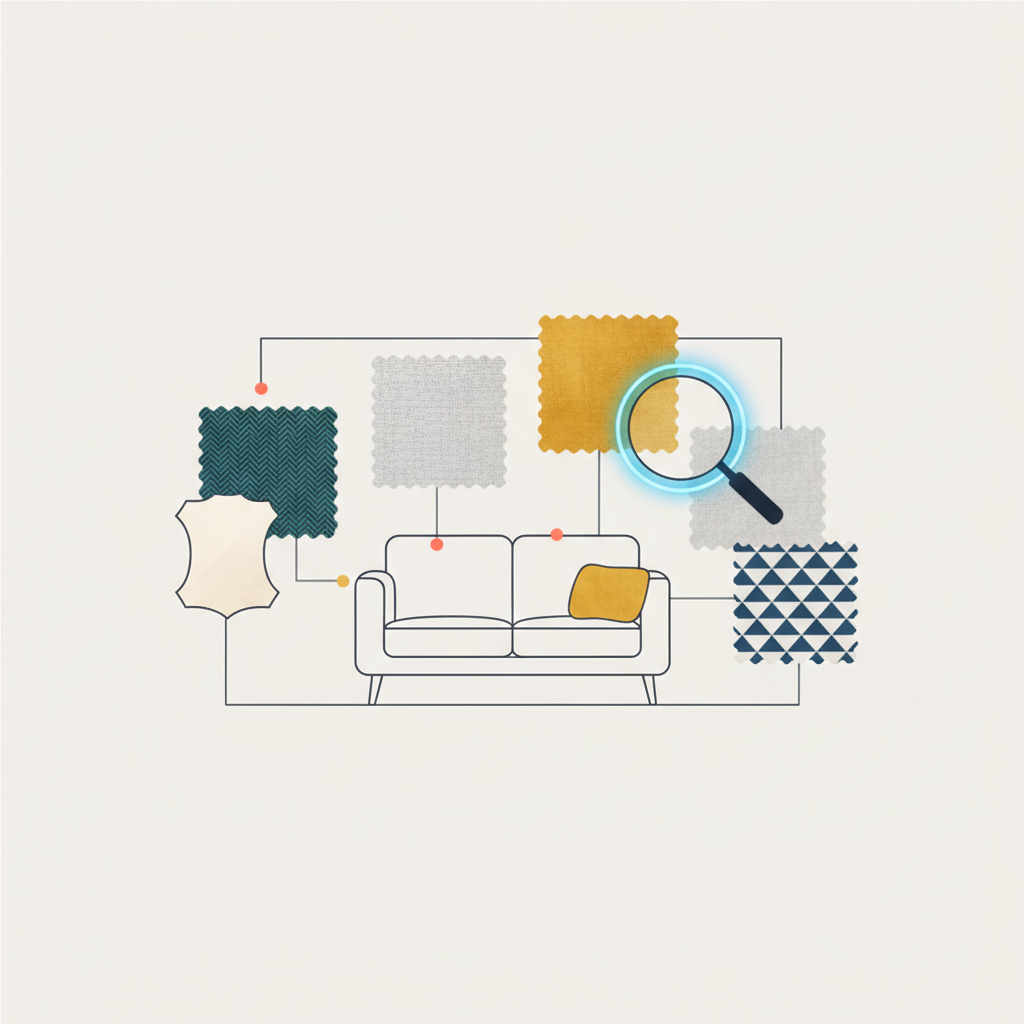
Common upholstery fabrics and what to look for:
- Cotton: Soft, matte, can wrinkle. Usually W/WS, but prone to water rings and dye bleed.
- Linen: Crisp with visible “slubs.” Often S/WS; can shrink and crease, needs careful moisture control.
- Wool: Warm, resilient. Typically S/WS; avoid high alkalinity and aggressive agitation to prevent felting.
- Silk: Lustrous, smooth. Often S/X; highly sensitive to water spotting—best left to delicate upholstery cleaning by professionals.
- Rayon/Viscose: Very soft, drapey, sometimes velvet-like. Commonly S; weak when wet, can brown.
- Polyester/Microfiber: Fine fibers, suede-like or smooth. Usually W/WS; durable and family-friendly.
- Acrylic: Wool-like hand; WS; may pill.
- Olefin/Polypropylene: Waxy hand, highly stain-resistant; W but heat-sensitive.
- Velvet/Chenille (any fiber): Pile or tufted yarns show nap. Treat as delicate; brush with the nap and avoid over-wetting to prevent pile distortion.
- Faux leather/vinyl: Often W; test for color transfer and plasticizer sensitivity.
Blends and specialty weaves complicate fabric specific care. When tags are missing, dyes are unstable, or the piece is valuable, a professional evaluation can save the fabric. Ajax Carpet Service technicians perform fiber and dye testing to tailor furniture fabric maintenance plans and select safe methods for cleaning upholstery fabrics.
General Upholstery Cleaning Guidelines
Start with the tag. Most manufacturers label upholstery with a care code:
- W: Water-based cleaners are safe.
- S: Solvent-only. No water.
- WS: Water- or solvent-based.
- X: Vacuum only; professional cleaning required.
Always spot test in a hidden area for colorfastness and texture changes. Press a white cloth moistened with the chosen cleaner for 30 seconds; check for dye transfer.
Vacuum regularly using the upholstery tool. Work in overlapping passes, following the fabric grain and into creases and tufts. This simple step prevents grit from cutting fibers and is the foundation of upholstery fabric care.
Treat spills immediately:
- Blot, don’t rub. Work from the outside in to avoid rings.
- Lift solids with a dull spoon.
- For W/WS fabrics, use a small amount of cool water and a mild, pH-balanced upholstery cleaner. For protein spills (milk, eggs), use cold water only.
- For S fabrics, use a dedicated dry solvent or isopropyl alcohol applied to a white cloth—never pour directly.
- For oily residues, solvent is usually best; water can set the stain.
- Rinse W/WS fabrics lightly with a damp cloth to remove cleaner residue, then blot dry.
Control moisture. Over-wetting can cause shrinkage, browning (especially on cotton, linen, and rayon/viscose), seam splitting, and mildew. Use minimal solution, blot thoroughly, and accelerate drying with fans and airflow. Avoid heat tools that can set stains or distort fibers.
Mind texture and nap. On microfibers, use short, gentle strokes; after drying, brush lightly to restore the nap. For chenille or velvet, keep strokes with the pile and avoid aggressive agitation. Leather and suede require separate, product-specific care.
Support furniture fabric maintenance with smart habits:
- Rotate and flip loose cushions weekly to distribute wear.
- Keep out of direct sun or use UV-filtering window treatments to reduce fading.
- Use washable throws in high-use areas and under pets.
- Remove pet hair with a vacuum, lint brush, or slightly damp rubber glove.
For deep soil, odors, or delicate upholstery cleaning on S or X codes, schedule professional service. When appropriate for W/WS fabrics, professional hot water extraction provides a thorough, residue-free result and extends fabric life. Consider applying a fabric protector after cleaning to improve stain resistance.
Care for Natural Upholstery Fibers
Natural fibers reward careful upholstery fabric care with longevity and a beautiful hand. They also react strongly to moisture, pH, heat, and sun, so a fabric specific care plan matters.
Start with the fundamentals for cleaning upholstery fabrics:
- Vacuum weekly using an upholstery tool and crevice nozzle.
- Keep out of direct sun; rotate cushions to even wear and fading.
- Check the cleaning code (W, S, WS, X) and test in a hidden spot for color transfer or rings.
- Blot spills with a white cotton cloth; never rub. Distilled water helps prevent water marks.
Cotton and linen (cellulosic fibers)
- Risk factors: dye bleed, water rings, shrinkage, and “cellulosic browning” if overwet or left to dry slowly.
- Spot care: use a small amount of neutral pH upholstery detergent mixed with distilled water to create light foam; apply foam only, blot, then dry quickly with a fan.
- For coffee or tea: blot immediately, apply foam, blot again, then follow with a light pass of distilled water on the surrounding area to feather the edge and prevent a ring.
- Avoid strong alkalis, vigorous agitation, and steam.
Wool
- Resilient, but sensitive to heat and high alkalinity; can felt or shrink.
- Use cool water and a wool-safe, slightly acidic cleaner; keep moisture minimal and dry promptly.
- Do not use bleach, oxygen boosters, or high-enzymatic products. For pet accidents, blot and lightly rinse with cool water; persistent odor or yellowing needs professional treatment.
Silk
- Extremely delicate; prone to water spotting and dye migration.
- For most stains, this requires delicate upholstery cleaning with solvent methods. At home, limit to dry blotting; do not wet clean.
- Keep away from sun and heat; use sheer curtains or UV film in bright rooms.
Leather (protected vs. aniline)
- Dust and vacuum seams; wipe with a barely damp cloth, then dry.
- Use a pH-balanced leather cleaner; condition protected leather 1–2 times a year, aniline a bit more often.
- Keep off heat registers and out of direct sun. Ink, body oils, and dye transfer often need a professional for safe removal.
When in doubt, furniture fabric maintenance is safest with a trained technician who can select the right method—water-based, solvent, or low-moisture—to protect natural fibers.
Cleaning Synthetic Upholstery Fabrics
Synthetic upholstery is built for everyday living, but smart upholstery fabric care keeps it looking fresh longer. Always start by checking the manufacturer tag (W, S, W/S, or X) and testing any product in a hidden spot. Then tailor your approach to the fiber.
Fabric-specific care:
- Polyester and microfiber (polyester/nylon blend): Usually W or W/S. Vacuum thoroughly. Mix 1/4 teaspoon clear dish soap in 1 quart of warm water; lightly mist and blot with a white cloth, working from the outside in. For oil-based smudges or ink, dab with isopropyl alcohol (70%), then blot. After drying, gently brush the nap to prevent matting.
- Nylon: Tough but soil-attracting. Pre-vacuum well, then use a neutral to slightly alkaline upholstery detergent (pH ~7–8). Don’t over-wet; rinse with a damp cloth to remove residues that can cause rapid re-soiling. Avoid high heat, which can distort fibers.
- Olefin (polypropylene): Highly water- and stain-resistant, but holds onto oils. Address greasy spots with a small amount of solvent or citrus-based degreaser per label directions; follow with a light water rinse to remove any film. Olefin dries quickly but has a low melting point—skip hot steam.
- Acrylic: Prone to pilling and static. Clean with cool water and mild detergent; use gentle agitation and avoid high heat during cleaning or drying. Remove pills with a fabric shaver; never pull them by hand.
- PU faux leather (vinyl-coated): Wipe with a mild soap solution and a damp cloth. Avoid harsh solvents, waxes, or conditioners formulated for natural leather.
Targeted upholstery cleaning tips:
- Blot, don’t rub. Use white, lint-free towels to prevent dye transfer.
- Separate water-based and oil-based stains. Enzyme cleaners help with food and pet accidents when the tag allows W; solvents are better for cosmetics and body oils on S-coded fabrics.
- Minimize rings by cleaning the entire panel edge-to-edge and finishing with a distilled water wipe.
- Speed-dry with fans and airflow; keep out of direct sun and away from space heaters.
Furniture fabric maintenance routine:
- Vacuum weekly with the upholstery tool and crevice wand.
- Rotate and flip cushions to distribute wear.
- Reapply fabric protector after cleanings.
- Schedule professional hot water extraction every 12–18 months for most synthetics—or sooner for homes with kids, pets, or winter salt and soil. For delicate upholstery cleaning or persistent odors, Ajax Carpet Service uses controlled temperatures, fiber-safe chemistry, and thorough rinsing to protect your investment.
Spot Treatment and Stain Removal Techniques
Quick action and the right method are essential for effective upholstery fabric care. Before you begin, locate the furniture’s cleaning code (often on the deck under cushions): W (water-based cleaners), S (solvent only), W/S (either), or X (vacuum only). Always test any product on an inconspicuous area first.
Start with a universal spot process:
- Remove solids with a dull spoon; don’t rub.
- Blot liquids with a clean white cloth, working from the outside in.
- Apply cleaner to the cloth—not directly to the fabric—to avoid overwetting.
- Blot, then rinse lightly (if permitted) and dry promptly with fans. Avoid heat on delicate fibers.
Fabric-specific care:
- Synthetics (polyester, nylon, olefin, W or W/S): Use a few drops of clear dish detergent in warm water (about 1/4 tsp per cup). For oily spots, repeat with fresh solution; avoid heavy scrubbing.
- Cotton/linen (often W/S): These can brown if overwet or cleaned with high pH products. Use minimal moisture, a neutral pH cleaner, and thorough drying to prevent water rings.
- Wool/silk (S or W/S): Work with cool water and a wool-safe, mild detergent if water is allowed. Avoid alkalines, peroxide, and high heat.
- Rayon/viscose/acetate (usually S): Fibers weaken when wet and spot easily. Prefer solvent-based spotters and very light agitation; consider professional help.
- Microfiber: Check code. W-coded responds well to mild soap solutions; S-coded often cleans best with isopropyl alcohol (dab, don’t soak), followed by gentle brushing.
Targeted stain approaches:
- Tannin (coffee, tea, red wine): Blot, then apply a mild acidic solution (e.g., 1:3 white vinegar to water) on W or W/S fabrics. Rinse lightly. For colorfast synthetics only, a small dab of 3% hydrogen peroxide can reduce remaining discoloration. Avoid on wool/silk.
- Protein (milk, blood, egg): Use cold water and an enzyme spotter on W-coded fabrics. Never hot water—it can set stains.
- Oils/grease: Sprinkle cornstarch or baking soda to absorb; wait 15–30 minutes; vacuum. Follow with solvent (S-coded) or mild soap (W-coded).
- Gum/wax: Harden with an ice pack, chip away carefully, then treat residue per fabric code.
- Ink: Dab with isopropyl alcohol on a cloth; do not flood. Extra caution on acetate/rayon—test thoroughly.
- Pet urine: Blot promptly, apply an enzyme cleaner (W-coded), and avoid heat, which sets odor.
If you see dye bleeding, browning, or persistent rings—or the fabric is coded S/X—call a professional. Ajax Carpet Service uses controlled hot-water extraction and specialty spotters to safely resolve complex stains and protect delicate upholstery.
When to Seek Professional Upholstery Cleaning
Not every spill requires a service visit, but certain situations do. Knowing when to bring in a pro protects your furniture, keeps warranties intact, and supports long-term upholstery fabric care.
Consider professional cleaning when you notice:
- “S” or “X” cleaning codes, unknown fabrics, or mixed blends. Solvent-only textiles (silk, linen, rayon/viscose, wool, velvet, Haitian cotton) can shrink, brown, or distort with water.
- Set-in stains or strong odors. Examples include ink, dye transfer from jeans, wine, coffee, nail polish, paint, and pet accidents that have penetrated into cushions or decking.
- Water marks, browning, or lines from DIY attempts. Over-wetting can cause dye bleed, cellulosic browning, or delamination of backing.
- Nap or texture distortion on chenille, velvet, and microfiber (crushing, shading, or streaking).
- Heavy body oils on arms/headrests, soot or construction dust, or filtration lines near HVAC drafts.
- Allergy or asthma concerns. Deep extraction reduces dust mites and embedded allergens better than routine vacuuming.
- High-value, antique, tufted, buttoned, or down-filled pieces where specialized handling is needed.
- Large sectionals or tight-weave cushion covers that are not designed for machine washing.
Timing matters for furniture fabric maintenance. As a rule of thumb:
- Every 12–24 months for average households.
- Every 6–12 months for homes with pets, kids, light-colored fabrics, or allergy sensitivities.
- Immediately after significant spills, pet accidents, or smoke exposure to prevent permanent setting.
Professionals start by identifying fibers and testing for colorfastness, then choose fabric specific care:
- W/WS-coded synthetics (polyester, olefin, many microfibers): controlled hot water extraction with pH-balanced solutions and thorough rinsing.
- S-coded textiles: low-moisture or dry-solvent methods to avoid swelling and browning.
- Delicate upholstery cleaning for velvet, silk, linen, and rayon with grooming to restore nap and quick-dry air movement to prevent rings.
- Enzyme treatments for pet urine, injection/extraction for cushion cores, odor neutralizers, and optional fabric protector application.
Ajax Carpet Service’s trained technicians use industry-standard processes for cleaning upholstery fabrics, including careful pre-testing, precise chemistry, and rapid drying to minimize risks—an approach that keeps your pieces looking their best while extending their usable life with practical upholstery cleaning tips.
January 14, 2026